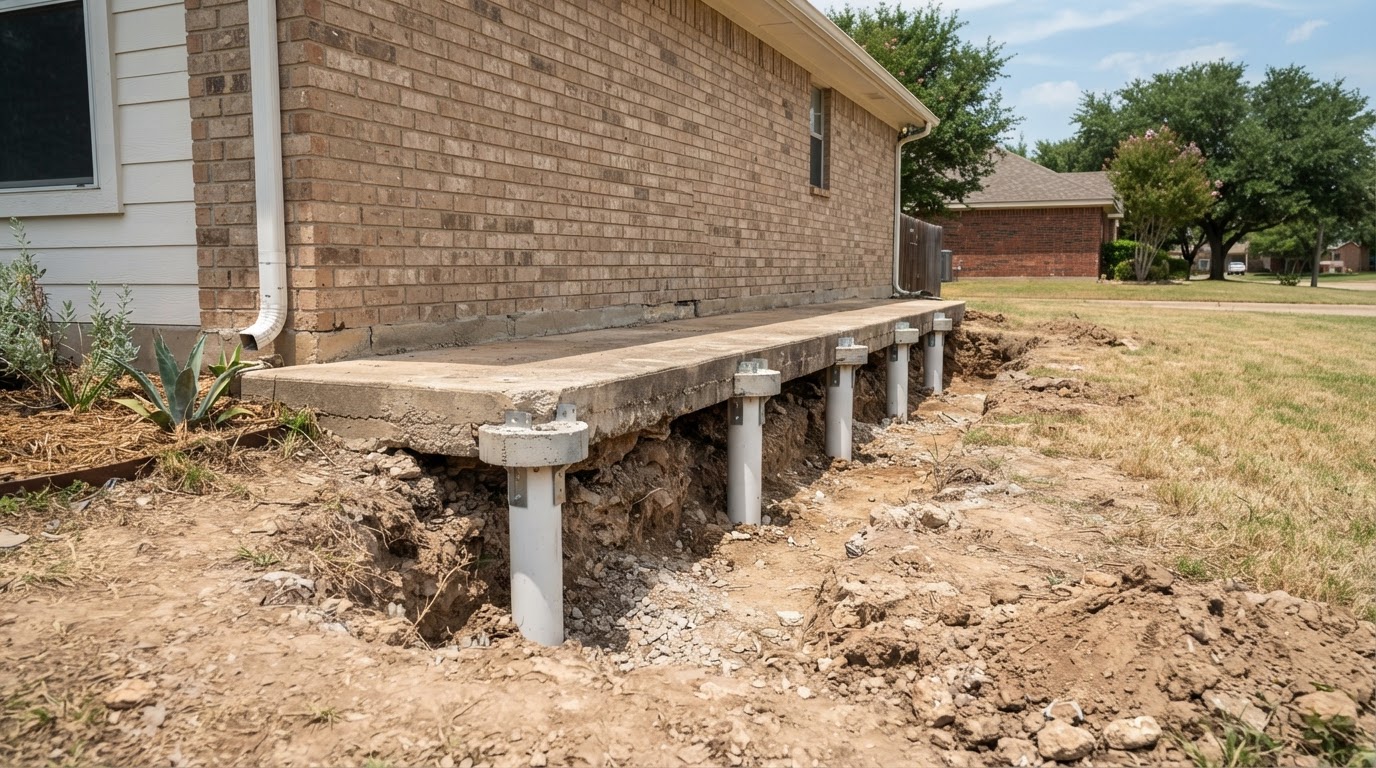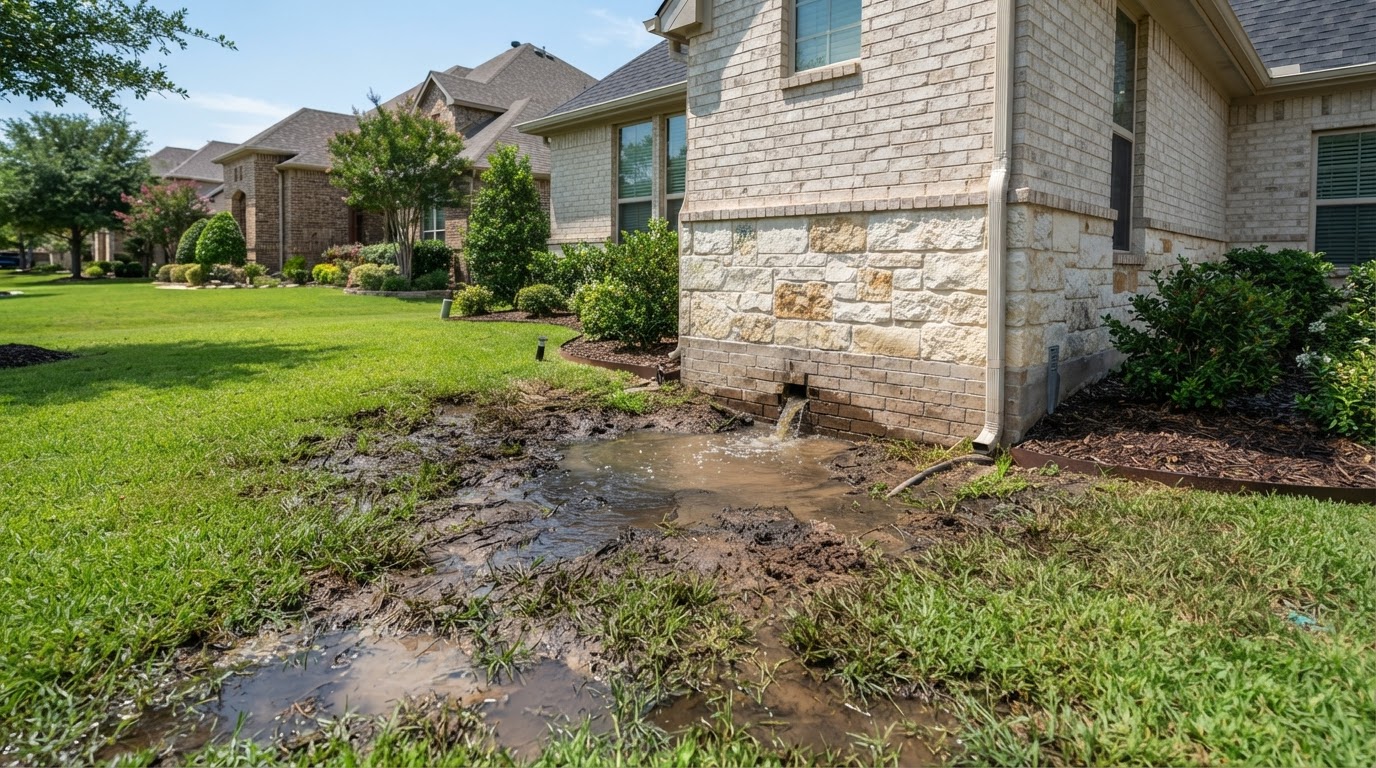
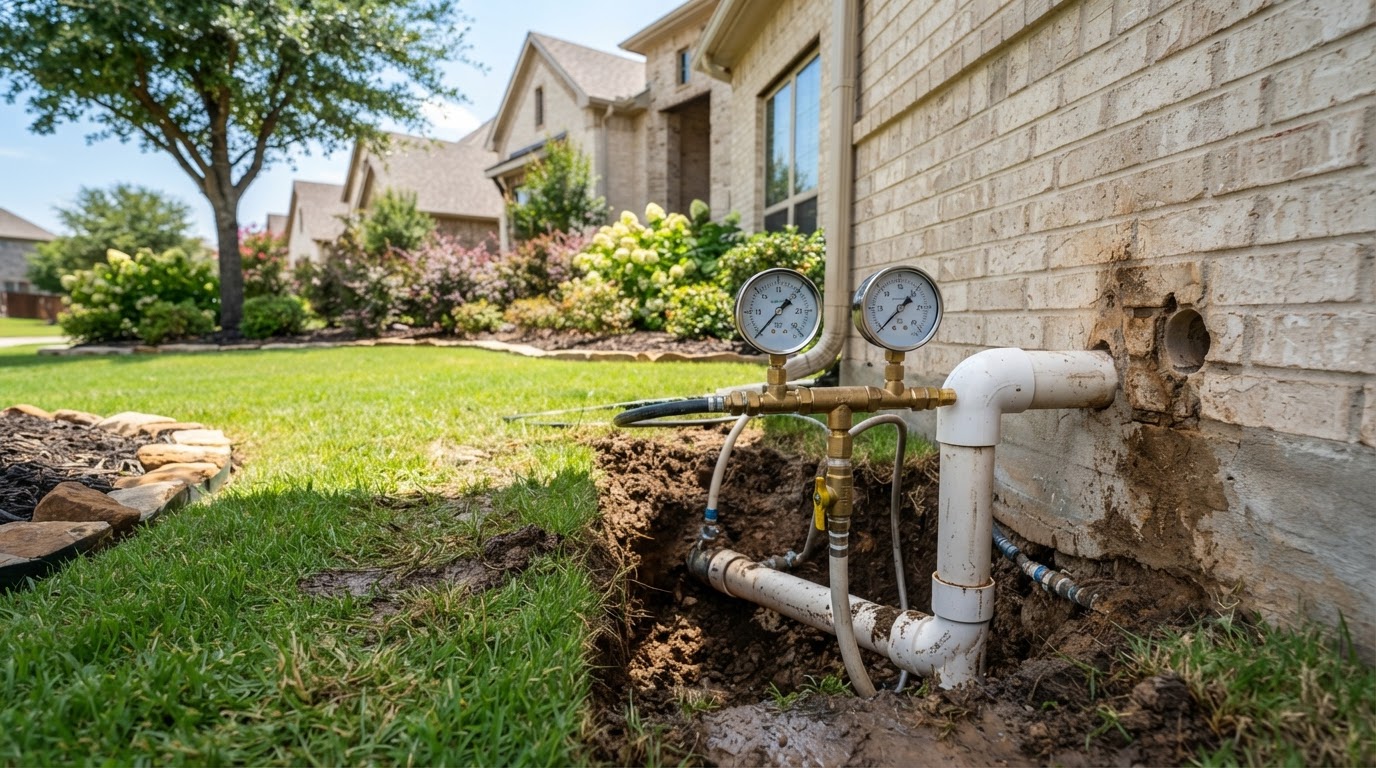
During the option period in Texas, buyers often wonder whether the under-slab drain system is in sound shape. A hydrostatic test isolates and pressurizes the home's sewer lines under the slab to verify whether water is holding or escaping into the soil.
What a Hydrostatic Test Actually Does
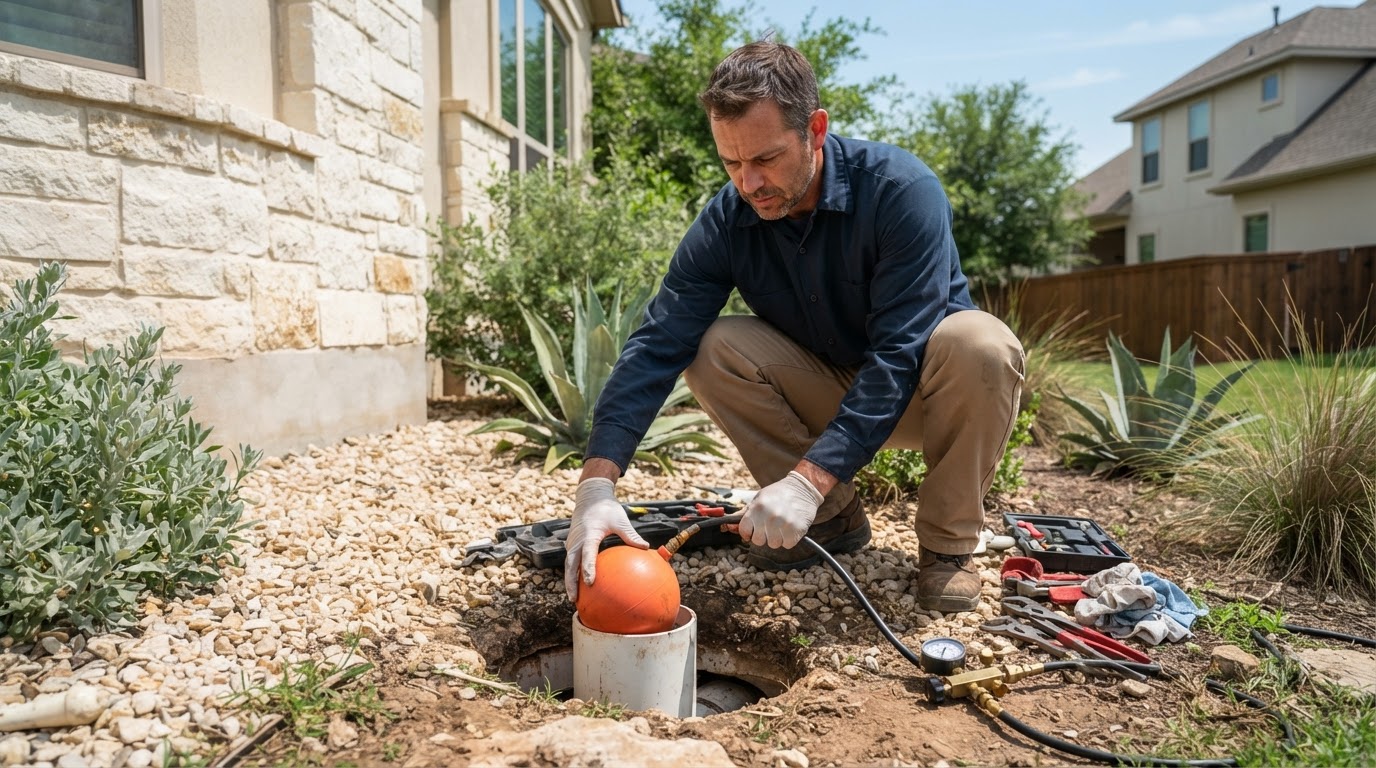
To test the sanitary sewer system under the foundation, an inflatable test ball is inserted into the main cleanout located outside the home. The system is filled with water up to slab level, and the water column is monitored for a designated duration.
If the water level holds steady, the under-slab system is watertight. If the water drops, it indicates an opening or separation somewhere along the under-slab sewer line.
When to Request a Test During Option Period
Hydrostatic testing is especially valuable when purchasing a home that has undergone previous foundation leveling, a home with cast iron plumbing, or one where signs of soil movement or slow drainage are present. Timing is critical: scheduling early in your option period ensures time to review results and discuss next steps with your agent.
What Happens If the Test Fails?
A drop in water level confirms a leak, but it does not tell you the exact location or cause. If a system does not hold, a sewer camera and isolation testing can pinpoint the precise defect so both parties have factual information.
Diamondback Plumbing & Leak Locate — serving Dallas–Fort Worth and Ellis County.